
Table of Contents
- Why Mask Durability in Food Processing Matters More Than You Think
- Mask Types and Materials That Hold Up on the Line
- How to Select Masks for Specific Food-Processing Tasks
- When to Replace a Face Mask: Practical Inspection Criteria for Every Shift
- Mask Replacement Guidelines for High-Humidity and High-Temperature Environments
- Mask Fit and Durability: How Seal and Structure Degrade Over a Shift
- Mask Care and Storage: Keeping Individually Wrapped Masks Fresh and Functional
- Conclusion
- Frequently Asked Questions
Last Updated: October 18, 2026
Why Mask Durability in Food Processing Matters More Than You Think
Mask durability in food processing is the ability of a face mask to keep its structure, seal, and filtering layers intact through a full shift of heat, moisture, and movement.
Food plants are hard on masks. Steam rises off wash-down lines. The OSHA respiratory protection guidance treats mask condition as part of workplace safety, not an afterthought.
Below, we'll show you exactly how to pick masks that last, spot failure early, and store them so they stay fresh.
Mask Types and Materials That Hold Up on the Line
The best masks for food processing balance three things: breathability, a steady seal, and layers that resist moisture. Material choice drives all three.
Most disposable masks use polypropylene in two forms. Spunbond layers form the outer and inner shell. Meltblown layers do the fine filtering in the middle. A three-layer build with a spunbond-meltblown-spunbond stack holds shape better than a thin two-layer mask.
Single-Use vs. Reusable: What Works in Food Processing
Single-use masks win in most food plants. They arrive clean, get worn once, and get tossed. That removes the guesswork of washing and drying, which often damages fabric and weakens filtration.
Reusable cloth masks have a place in low-moisture, low-splash areas. But cloth soaks up moisture and dries slowly. In a humid room, a damp cloth mask is a hygiene problem waiting to happen.
- Single-use: best for wet, hot, or high-splash zones
- Reusable: fine for dry, low-contact tasks with a strict wash schedule
- Never mix the two in one hygiene zone without clear rules
Construction Details That Affect Durability
Small build choices decide how long a mask lasts. Look for these:
- Ear loops that resist snapping under tension
- An adjustable nose wire that keeps its bend
- A generously sized body so it doesn't pull tight and tear
Forbes Medical PPE builds its black 3-ply mask with a 45 GSM spunbond outer layer, a 25 GSM meltblown middle, and a 20 GSM spunbond inner layer. The ear loops are made to hold up, and each mask ships individually wrapped. That wrapping matters in food settings where a clean mask at the start of a shift is the whole point.

How to Select Masks for Specific Food-Processing Tasks
Match the mask to the task, not to a generic "one size fits all" order. A wet wash-down station and a dry packing line put very different stress on a mask, and they call for different mask designs. The first step is to separate two purposes that often get blurred: respiratory protection (filtering airborne particles for the wearer) and hygiene or contamination control (keeping the wearer's droplets and shed particles out of the product).
Use this task-based framework:
- Map each zone by exposure type. Note moisture, heat, splash risk, grease or oil aerosol, cleaning-chemical mist, allergen dust, and how much workers talk or move. Record these on a simple zone chart.
- Classify the purpose. Is the mask primarily for worker respiratory protection, product contamination control, or both? A barrier-style mask supports hygiene; a respirator cleared by FDA supports respiratory protection.
- Rank exposure. Wet and hot zones need the sturdiest build and the shortest wear windows. Dry goods and allergen-handling areas may need a mask that resists dust loading and holds its seal during repeated head movement.
- Set a wear time per zone. High-humidity areas get shorter windows than dry offices. Allergen-handling zones may require a fresh mask at each product changeover to prevent cross-contact.
- Pick the mask build. Choose a three-layer mask with strong ear loops for wet, active work. For dry, dusty tasks, prioritize a secure nose wire and a body that does not collapse when the wearer breathes deeply.
- Test one shift. Watch for sagging, moisture, loop failure, or seal loss before you commit to a bulk order.
- Document the choice. Record which mask goes to which zone so reorders stay consistent and so your hazard assessment and hygiene program reflect actual practice.
Task-specific selection guidance
- Wet processing and wash-down areas: High splash and humidity soften mask layers and stretch ear loops. Select a three-layer polypropylene mask with a firm nose wire and ear loops that resist tension. Expect shorter wear windows and plan for mid-shift swaps.
- Dry goods and packaging: Dust and light particles are the main load. A mask that holds its shape and seal during talking and bending matters more than splash resistance. Individually wrapped masks reduce handling contamination.
- High-heat areas (cook lines, ovens, steam tunnels): Heat softens ear loops and nose wires over time. Choose a mask with a generous body size so it does not pull tight, and set replacement intervals based on the worst heat in the zone.
- Allergen handling: The priority is preventing cross-contact. Use a fresh mask at each changeover, store unused masks away from allergen dust, and never reuse a mask between allergen and non-allergen runs.
A common mistake is buying one mask for the whole facility. The dry break room and the steamy cook line don't need the same protection or the same durability. Splitting your order by zone saves waste and keeps workers comfortable. Also note that the FDA does not certify masks; it clears them. Barrier-style masks are not required to be ASTM tested or certified, so selection should rest on your own task assessment, not on a certification label alone.
When to Replace a Face Mask: Practical Inspection Criteria for Every Shift
Replace a face mask when it shows visible damage, loses its seal, or becomes damp. In food processing, check at the start of each shift and again at mid-shift.
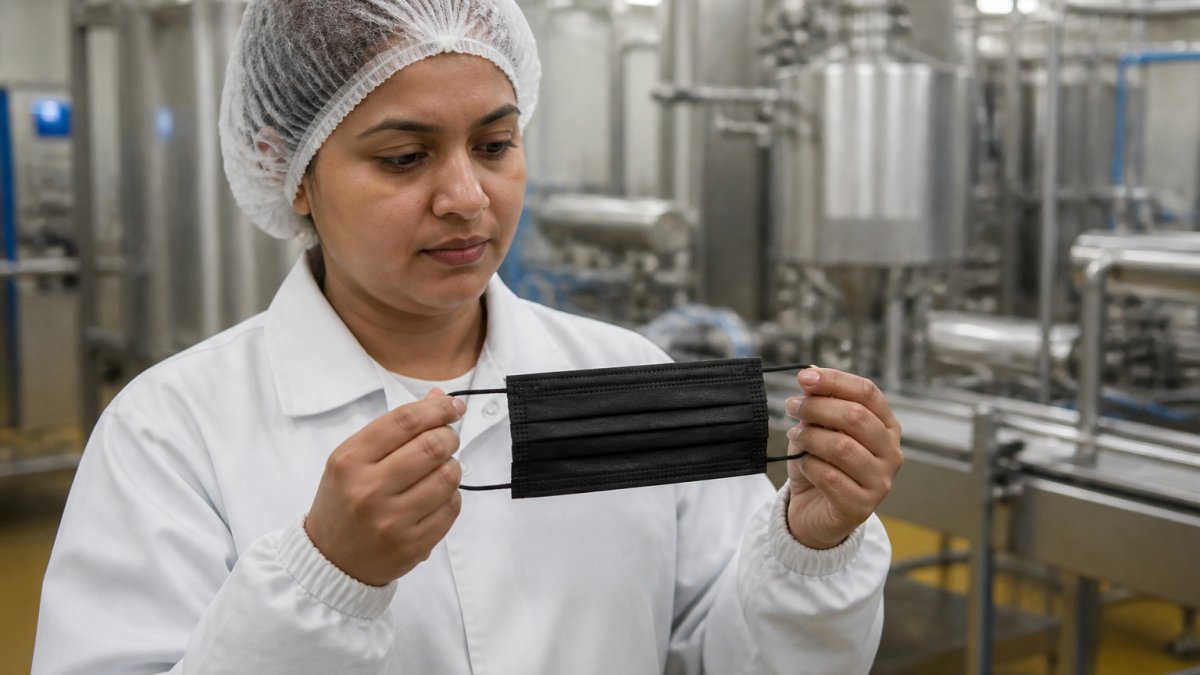
Run this quick check every shift:
- Any tear, hole, or frayed edge
- Ear loop stretched, cracked, or about to snap
- Nose wire bent out of shape or poking through
- Mask damp, soiled, or stained
If any box is checked, swap the mask. A damaged mask with a bad seal lets air slip around the edges instead of through the filter. That defeats the purpose.
Mask Replacement Guidelines for High-Humidity and High-Temperature Environments
In hot, steamy rooms, moisture is the enemy. It weakens the mask structure and cuts how well it filters. Set shorter replacement windows in these zones and base them on the worst conditions the mask will meet, not the best.
Black 3-Ply Face Masks Individually Wrapped and Disposable 200 per Case →
How moisture and heat degrade a mask
- Moisture softens the polypropylene layers. Spunbond and meltblown fibers absorb and wick moisture, which can cause the mask body to sag and lose its shape. A sagging mask no longer holds a steady seal against the face.
- Heat relaxes ear loops and nose wires. Elastic loops lose tension over time in warm air, and the nose wire can soften and stop holding its bend. Once the loop stretches or the wire flattens, the seal breaks even if the filter media is intact.
- Condensation and splash create a wet interface. A damp mask against the face is uncomfortable, which leads to more touching and adjusting, and that handling increases contamination risk.
- Cleaning-chemical mist can degrade materials. In sanitation zones, airborne chemical mist may weaken fibers or loops. Replace any mask exposed to chemical mist rather than letting it dry and reusing it.
Practical replacement rules for humid and hot areas
- Swap masks more often than in dry zones. A common pattern is to shorten the wear window by roughly half in steamy rooms compared with dry offices, but confirm the interval with a one-shift trial in each zone.
- Replace any mask that feels damp against the face, even if it looks intact.
- Keep spare individually wrapped masks within reach so swaps are quick and workers do not delay replacement.
- Never let a wet mask dry out and go back on. Drying does not restore lost structure or seal.
Connecting replacement to food-safety and workplace programs
Replacement intervals should be written into your site hygiene program and hazard assessment, not left to individual judgment. Document the wear window for each zone, the inspection triggers, and the swap procedure.
High heat also softens ear loops and nose wires over time. A mask that lasts a full shift in a cool office may only hold up a few hours on a hot line.
Mask Fit and Durability: How Seal and Structure Degrade Over a Shift
Fit and durability are linked. A mask that starts snug can loosen as loops stretch and the nose wire bends. Once the seal breaks, protection drops even if the mask looks fine.
Watch for these signs of seal loss:
- The mask slides down when the wearer talks
- Air escapes at the top edge near the eyes
- The mask feels loose around the cheeks
- The wearer keeps touching or adjusting it
Adjusting a mask all shift is a red flag. It usually means the fit was wrong from the start or the structure has given out. A properly sized mask with a bendable nose wire holds its place with far less fussing.
Mask Care and Storage: Keeping Individually Wrapped Masks Fresh and Functional
Storage decides whether a fresh mask is actually fresh when a worker opens it. Individually wrapped masks stay clean and dry until the moment of use, which is exactly what food hygiene requires.
Follow these storage habits:
- Keep wrapped masks in a dry, cool spot away from steam
- Store away from chemicals, cleaning sprays, and food contact surfaces
- Never leave masks in a hot vehicle or near ovens
- Set out only what a shift needs, then reseal the rest
A paper bag or breathable container works for short-term holding of unwrapped masks, but wrapped masks are the safer default in a plant. They cut handling and keep moisture out.
Conclusion
The hardest part of mask durability in food processing isn't picking a mask. It's keeping the right mask clean, dry, and intact across every zone and every shift.
Forbes Medical PPE makes a black 3-ply mask built for this kind of daily wear. Each mask is individually wrapped for freshness, made with a three-layer polypropylene build, and produced in Peoria, Illinois with dependable volume pricing for large facilities.
Frequently Asked Questions
How long can a mask be used in a food-processing environment?
A disposable mask should be replaced when it becomes moist, soiled, or visibly damaged, which can happen within a single shift in high-humidity or high-temperature areas. Many facilities set replacement intervals of 4 to 8 hours depending on the task. Individually wrapped masks make it easy to swap mid-shift without disrupting hygiene protocols.
What signs indicate that a disposable mask should be replaced?
Replace a mask if it is wet from breath or sweat, torn, crushed, or visibly soiled. Also replace it if the nose wire no longer holds shape, the ear loops have stretched, or the mask no longer seals against your face. In food processing, any mask that contacts product or a contaminated surface should be discarded immediately.
How should masks be stored between uses in a food-processing facility?
Store unused masks in their original individual wrappers until the moment of use. Once unwrapped, a mask should not be stored for reuse in food-processing areas because moisture and airborne particles can accumulate. Keep wrappers sealed and away from damp surfaces, and discard any mask that has been dropped or left exposed.
Can a mask be reused after it gets wet or soiled?
No. A wet or soiled mask loses filtration performance and fit, and in food processing it becomes a contamination risk. Discard it immediately and replace it with a fresh, individually wrapped mask. Reusing a damp mask can also cause skin irritation and reduce breathability, making it harder to wear for the rest of the shift.
A reliable mask supply starts with a supplier you can count on. Forbes Medical PPE offers individually wrapped, three-layer masks made in the USA, with volume pricing and pallet quantities for facilities of any size. Get started with Forbes Medical PPE and keep every shift covered with masks that stay fresh, fit right, and last.